ARTICLE: Book Box: Himalayan floods, Sarajevo siege and the stories that anchor us, Sonya Dutta Choudary, Hindustan Times, 7 September 2025.
PODCAST: How Acclaimed Debut Novelist Priscilla Morris Writes, in conversation with Kelton Reid, The Writer Files, 15 August 2025.
ARTICLE: Priscilla Morris: “El mundo se desintegra y la cultura es la mejor manera de no volverse loco” [Priscilla Morris: ‘The world falls apart and culture is best way to stay sane’], Lara Gómez Ruiz, La Vanguardia, 28 May 2025.
REVIEW: Jours Amers à Sarajevo [Bitter Times in Sarajevo], Joséphine Carcopino, Le Monde, 28 Mar 2025.
ARTICLE: Priscilla Morris i la tragèdia rere el somriure, Lluis Llort, El Punt Avui, 2 Mar 2025.
TV INTERVIEW: Ignasi Gaya interviews Priscilla Morris, TN Vesper, TV3, Catalunya, 25 Feb 2025.
INTERVIEW: Priscilla Morris: “In the fire my great-uncle lost all his life’s work” [original in Catalan and can also be read in Spanish], Núria Sala Ventura, Diari ARA, 21 Feb 2025.
RADIO INTERVIEW: Papallones Negres de Priscilla Morris, In conversation with Adolf Beltran, L’Irradiador, Catalunya Radio, 18 Feb 2025.
INTERVIEW: Priscilla Morris: «Vaig escriure la novel·la com si la guerra fos la protagonista» [I wrote the novel as if the war were the protagonist], Àlex Milian, El Temps, 18 Feb 2025.
INTERVIEW: Priscilla Morris: “Encara que no tinguessin menjar ni aigua, no tan sols van sobreviure sinó que ho van fer amb dignitat” [Although they had no food or water, they not only survived but did so with dignity], Assumpció Maresma Matas, VilaWeb, 15 Feb 2025.
TV INTERVIEW: Priscilla Morris talks with Xavier Grasset on La Selva, TV3, Catalonia, 13 Feb 2025.
ARTICLE: Sarajevo, l’art i la resistència ciutadana sota el setge [Sarajevo, art and citizen resistance under siege], Xavier Montanyà, VilaWeb, 9 Feb 2025.
REVIEW: The Best of Historical Fiction Books of 2024, Alida Becker, The New York Times, 5 Dec 2024. Black Butterflies selected as one of top 10 historical novels.
INTERVIEW: La scrittrice britanica Morris a “Un mare di racconti”: «L’assedio di Sarajevo sulle ali di una farfalla» [British writer Morris at ‘A Sea of Stories’: The siege of Sarajevo on the wings of a butterfly], Elisa Grando, Il Piccolo, 11 Oct 2024.
INTERVIEW: Liefdesbrief aan een echte smeltkroes [Love letter to a melting pot], Marjolijn de Cocq, Het Parool, 7 Sep 2024.
REVIEW: Rebirth Amongst Despair in “Black Butterflies”, Malavika Praseed, Chicago Review of Books, 28 August 2024.
ARTICLE: Beginner’s Pluck: Black Butterflies author Priscilla Morris, Sue Leonard, Irish Examiner, 24 August 2024.
ESSAY: What the Deliberate Targeting of Libraries Reveals About the Nature of War, Priscilla Morris, Literary Hub, 20 August 2024.
RADIO: KMUW Radio Interview with Beth Golay, 20 August 2024. (Listen from 6.35)
REVIEW: Review of Black Butterflies, Freya Sachs, Book Page, 19 August 2024.
REVIEW: Weathering the Long Siege of Sarajevo, A Painter Keeps Painting, Bea Setton, The New York Times, 17 August 2024.
STARRED REVIEW: Black Butterflies: A classic cautionary tale of contemporary relevance, Kirkus, 17 August 2024.
ARTICLE: 12 Must-Read Books of August 2024, Michael Welch, Chicago Review of Books, 1 August 2024.
ARTICLE: Writers to Watch: Fall 2024, Matt Seidel, Publishers Weekly, 12 July 2024.
STARRED REVIEW: Starred Review of Black Butterflies, Rebecca Hopman, Booklist, 1 July 2024.
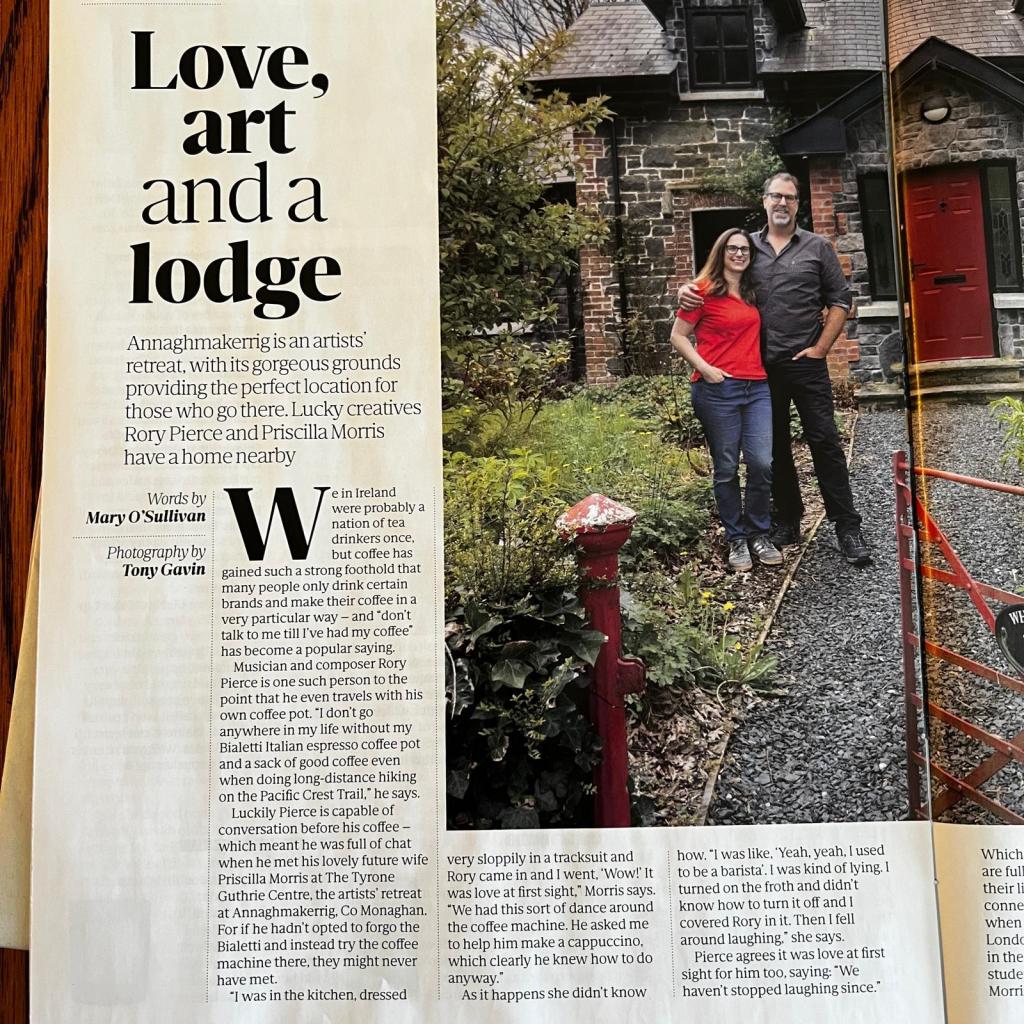
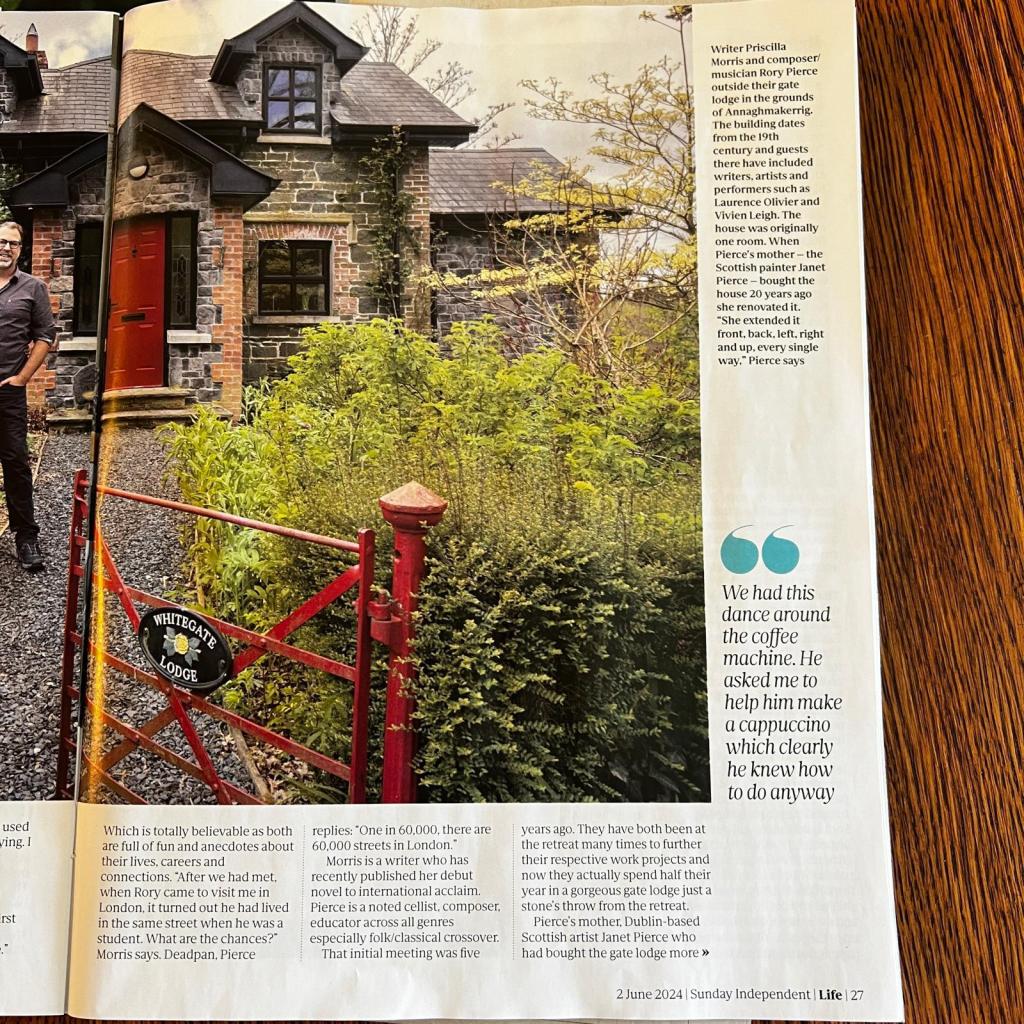
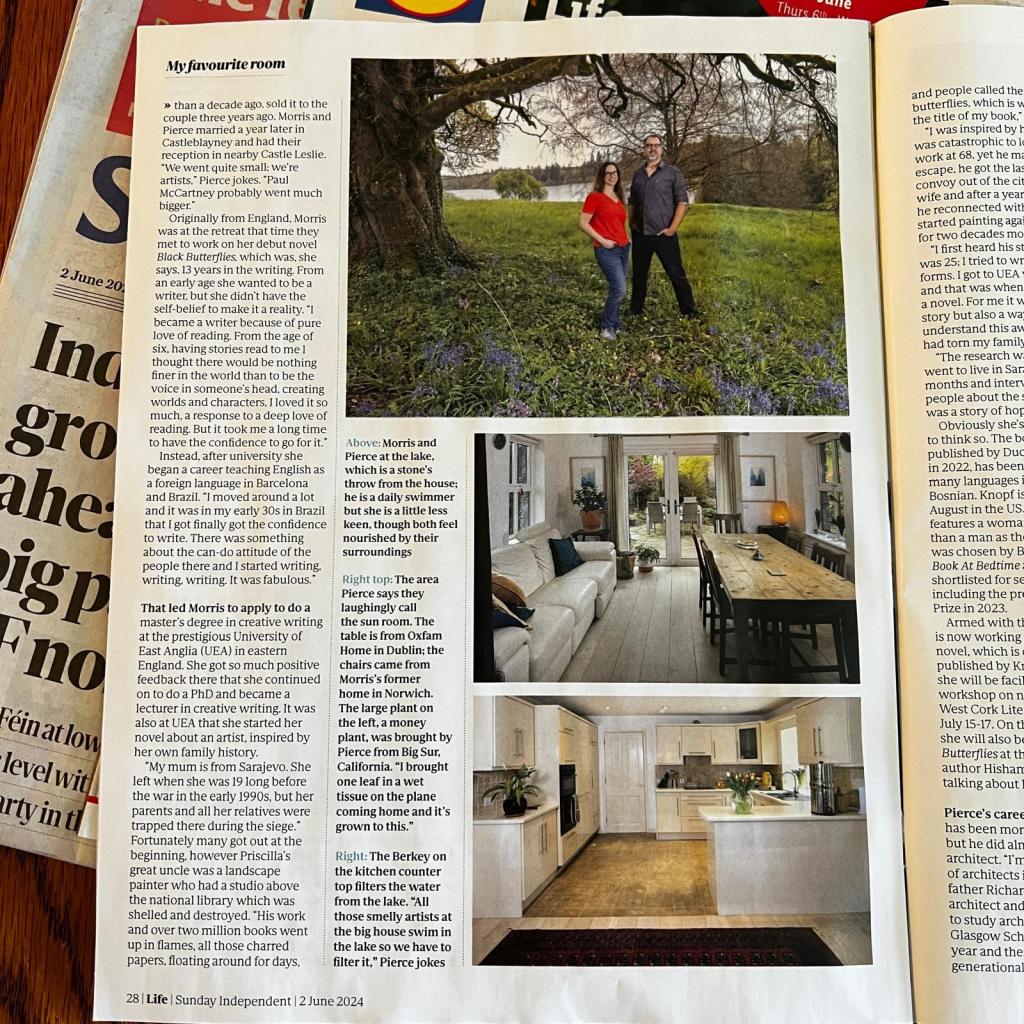
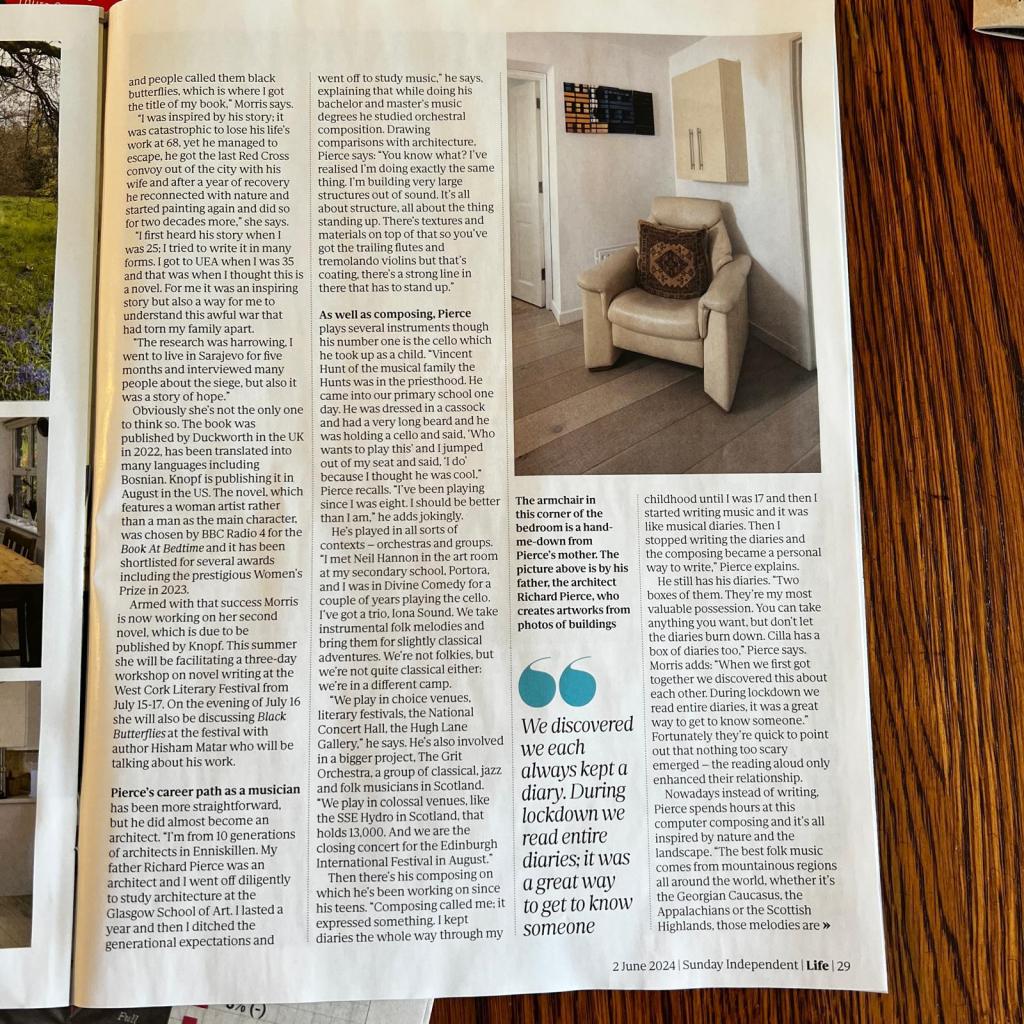
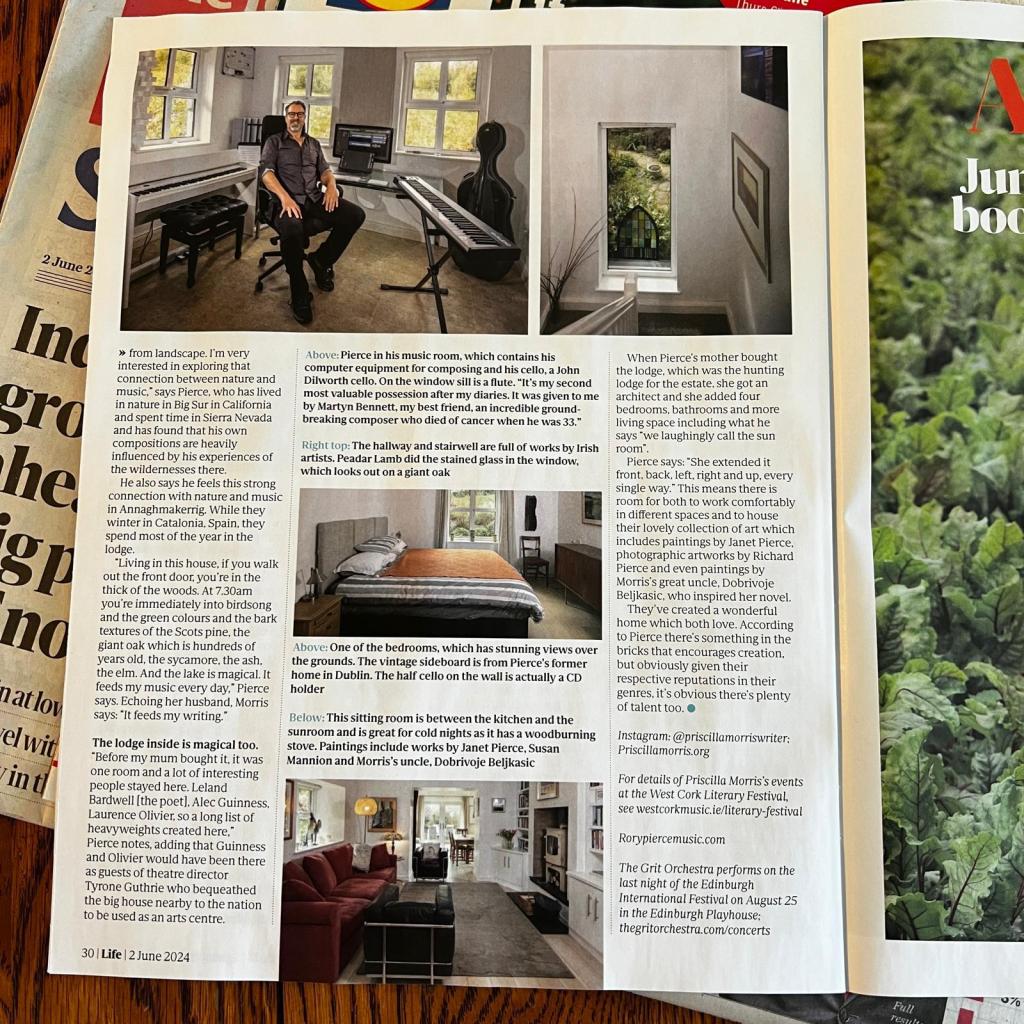
ARTICLE: My favourite room: Love, art and a lodge, Mary O’Sullivan, Irish Independent, 2 Jun 2024. Scroll down for full article.
STARRED REVIEW: Starred Review of Black Butterflies, Publishers Weekly, 29 May 2024, and ‘Review of the Day’ in their daily email, 30 May 2024.
RADIO: BBC RADIO 4 BOOK AT BEDTIME, Black Butterflies, abridged by Jill Waters, read by Fenella Woolgar. 10 episodes over 2 weeks, 10.45pm, 18-29 Mar 2024. Click on the link to listen.
PODCAST: Novel Experience. Kate Sawyer chats to Priscilla Morris. S8 Ep3, 16 Jan 2024.
RADIO: Dragana Smart and Priscilla Morris talk to Samira Ahmed about Dobrivoje Beljkašic’s art, the Dobri100 project and how his story inspired Black Butterflies. Front Row, BBC Radio 4, 31 Oct 2023, 7.15pm.
INTERVIEW: Write On! Interviews: Author Priscilla Morris. Pen to Print, 24 September 2023.
PODCAST: PRISCILLA MORRIS on writing resistance and community in Black Butterflies The Writing Life podcast, National Centre for Writing, 11 September 2023.
RADIO: Priscilla Morris in Conversation with Hannah Murray, The TRE Book Show, Talk Radio Europe. 20 July 2023.
YOUTUBE: PRISCILLA MORRIS in conversation with Dunja Ilić, Bookstan International Literature Festival, Sarajevo, Bosnia and Herzegovina, 6 July 2023.
INTERVIEW: Interview: Priscilla Morris – “My novel is an attempt to understand Bosnian war”, Shireen Quadri, Hindustan Times, 13 June 2023.
RADIO: Priscilla Morris on her Women’s Prize for Fiction shortlisted novel, in conversation with Samira Ahmed, Front Row BBC Radio 4, 30 May 2023.
INTERVIEW: A Way With Words: Priscilla Morris, Millie Walton, Citizen Femme, 23 May 2023.
PODCAST: Priscilla Morris on the Siege of Sarajevo, in conversation with Samia Aziz, The Diverse Bookshelf podcast, 22 May 2023.
PODCAST: Bookshelfie: S6 Ep7: 2023 Shortlisted Author Special. Women’s Prize for Fiction Podcast. Jacqueline Crooks, Louise Kennedy, Barbara Kingsolver, Priscilla Morris, Maggie O’Farrell and Laline Paull in conversation with Vick Hope. 11 May 2023.
ARTICLE: ‘We were blown away’: how we chose the Women’s prize shortlist, Rachel Joyce, The Guardian, 26 April 2023.
ARTICLE: Three debut novels compete among Women’s prize for fiction shortlist, Sarah Shaffi, The Guardian, 26 April 2023.
ARTICLE: The Women’s Prize for Fiction shortlist 2023: it’s the year of older writers, Susie Goldsbrough, The Times, 26 April 2023.
ARTICLE: Women’s Prize for Fiction 2023: debutants join past winners on shortlist, The Irish Times, 26 April 2023.
INTERVIEW: ‘Resolution and Love Amongst the Ruins: A Conversation with Priscilla Morris‘
interviewed by Madeleine Knowles, nb. magazine, Spring 2023, Issue 115, Resolution.
ARTICLE: ‘Resolution‘ by Priscilla Morris, Guest Editor, nb. magazine, Spring 2023, Issue 115.
ARTICLE: ‘Writing about Sarajevo: life under siege, art on fire’, Priscilla Morris, The Irish Times, 17 Oct 2022. About the family stories behind Black Butterflies. Scroll down for full article.
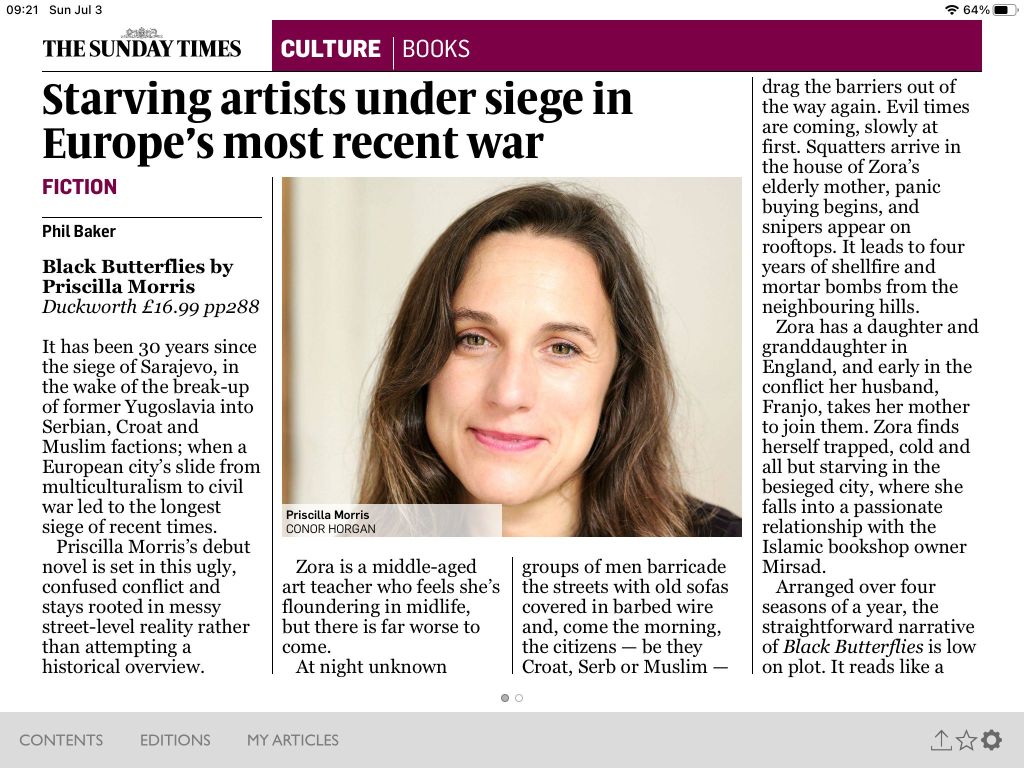
REVIEW: ‘Black Butterflies by Priscilla Morris review – the siege of Sarajevo comes to life’, Phil Baker, The Sunday Times, 3 Jul 2022. Also titled: ‘Starving artists under siege in Europe’s most recent war’. Scroll down for newspaper review.
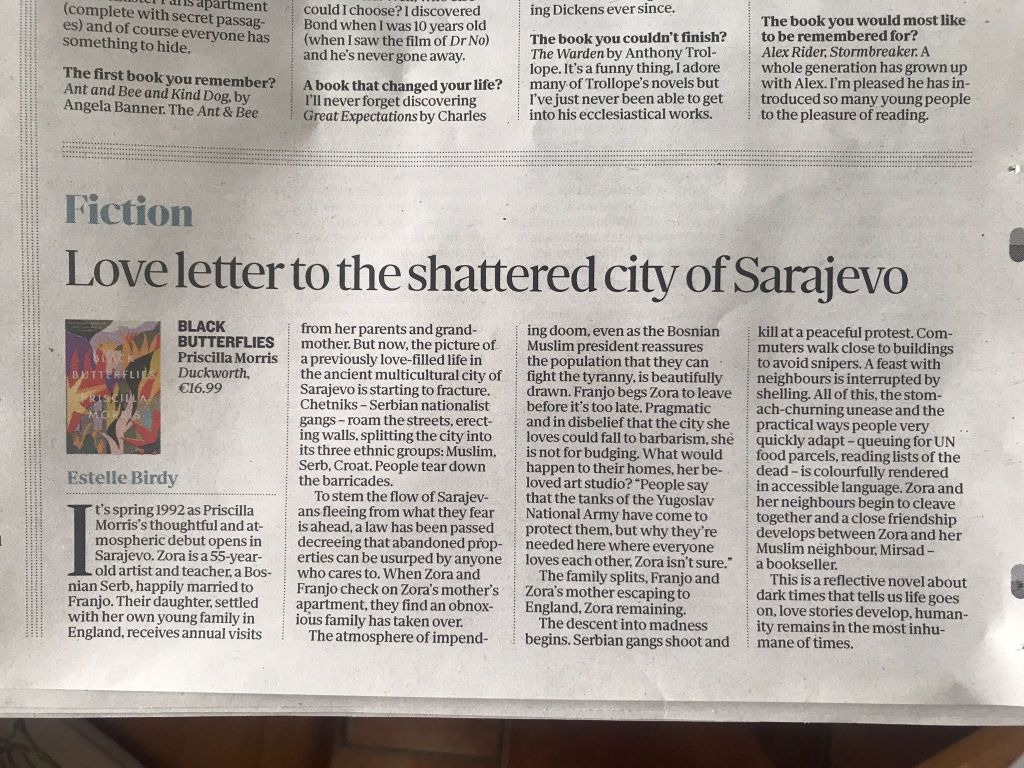
REVIEW: ‘Priscilla Morris’s Black Butterflies is a timely love letter to war-torn Sarajevo’, Estelle Birdy, Sunday Independent, 5 June 2022. Also titled: ‘Love letter to the shattered city of Sarajevo’. Scroll down for newspaper review.
Mary O’Sullivan, Irish Independent, 2 Jun 2024
Phil Baker, The Sunday Times, 3 Jul 2022

Estelle Birdy, Irish Independent, 5 Jun 2022
Priscilla Morris, Irish Times, 17 Oct 2022
THE IRISH TIMES
Writing about Sarajevo: Life under siege, art on fire
Black Butterflies author and UCD creative writing lecturer Priscilla Morris writes about the family stories that inspired her Sarajevo novel. The Siege of Sarajevo started 30 years ago.
Priscilla Morris
Mon Oct 17 2022
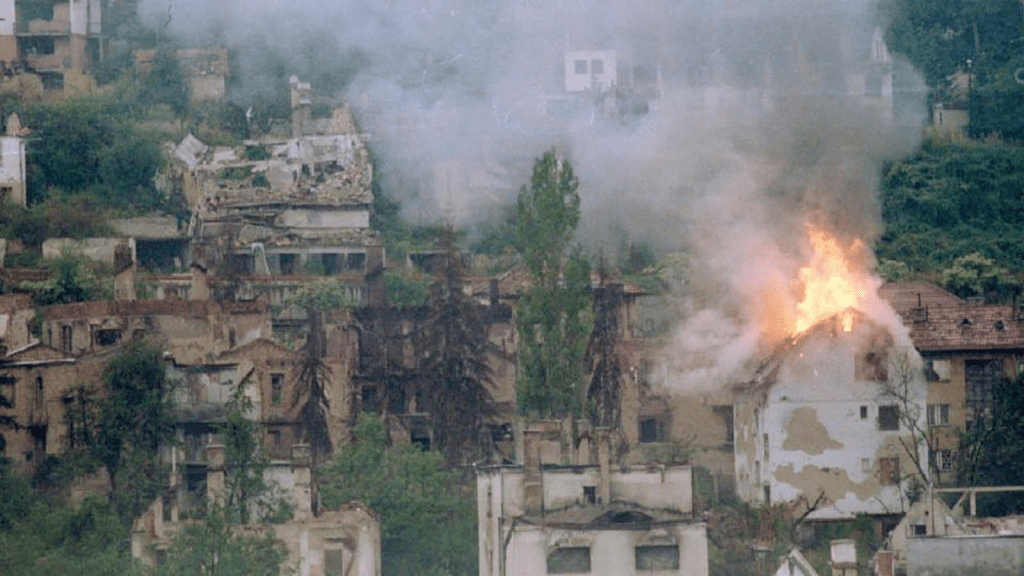
Three decades ago in August 1992, Bosnian Serb nationalists fired incendiary shells at Sarajevo’s old Town Hall, home to the National and University Library of Bosnia. Over 1.5 million books blazed. Flames streamed out of tall gridded windows. On the top floor, my great-uncle Dobri’s studio, one of three artists’ ateliers, burned. When he visited some days later, he stared up through the blackened facade to the sky where his studio had once been. Experiencing the loss as a form of death, he thought he would never paint again.
Dobrivoje (Dobri) Beljkašić was a landscape painter renowned for painting Bosnia’s Ottoman bridges. Like the men in the hills encircling Sarajevo, he was a Bosnian Serb, but not a nationalist. The Sarajevo he knew and loved was one where different nationalities lived and worked peaceably side by side.
My grandparents, meanwhile, did not dare leave their flat in the new part of Sarajevo. My grandmother became an expert in trapping pigeons to eat, and making nettle soup. My grandfather, a huge ex-wrestler, deflated like a punctured beachball.
In London, we — my younger sisters, Mum and Dad and I (aged 19) — watched the news anxiously each night, scanning faces for a glimpse of a relative.
The Bosnian capital had been under siege for five months. The head Post Office and telephone exchange were blown up in May, making communication with my Mum’s parents impossible. No one could leave the city, the gas, electricity and water supplies had been cut, and relief food was flown in to keep the mixed population of Muslims, Serbs and Croats alive. People of all nationalities were shot at by snipers as they crossed the street, while the ‘men in the hills’ shelled homes, hospitals, mosques and churches.
My mother left Sarajevo in 1968, studied in Paris, then met my English father while waitressing on the King’s Road and settled down in England. Childhood summers were spent in Sarajevo and the surrounding mountains. Riding the children’s train at Sarajevo Zoo, laughing aunts and uncles, sitting cross-legged on a pile of Turkish rugs in the Muslim marketplace, dipping a sly finger into my grandmother’s syrupy baklava, swimming in rivers, traipsing through forests on the look out for bears. These were my idealised memories.
It was painful to equate them with the shocking images on the BBC. The TV version of Sarajevo seemed a horrific distortion. A lie. My guttural response was desperate sadness, which often flipped into anger. Mentally, I felt blocked, extremely puzzled and anxious, as if there was something logical I could not grasp, that, once understood, would make everything click into place.
In early 1993, after 10 months of next-to-no communication from my grandparents, my accountant father bought a flak jacket, flew out to Split, and hitched his way into Sarajevo. He gained entry with a Times press pass. The deal was that he would publish the journal of his rescue trip. His parents-in-law were alive, thank God. They opened a hoarded-away bottle of whiskey and invited the neighbours over to celebrate. When my father visited my mother’s Muslim aunt the next day, she couldn’t stop crying. Her brother had been killed by a sniper the week before.
In London, our home swelled with refugee relatives. Gaunt, chain-smoking, they jumped each time a door slammed.
It took a depressing three weeks to arrange the paperwork for my grandparents to leave. They left via Belgrade, the only possible route for my Bosnian Serb grandfather. Returning via Muslim-and-Croat-controlled territory might have got him killed.
In London, our home swelled with refugee relatives. Gaunt, chain-smoking, they jumped each time a door slammed. They stayed a few nights, or sometimes weeks, before moving on.
I started university in late 1993. At some point, my grandparents moved into an ex-council flat in a high-rise. Whereas my grandmother strove to adjust, attending English lessons for refugees, my grandfather refused to learn. I remember the flat being perpetually dark because he insisted the curtains were drawn. My grandmother would be working on one of the multi-piece jigsaws that covered almost every surface, while my grandfather lay in bed, whistling when he wanted a glass of water.
When he died a few years later, my grandmother opened the curtains, bought a budgie and proudly hung the E that she got in her English classes on the wall. She asked friends round for coffee and baklava.
His incense-filled funeral at the Serbian Orthodox Church in Notting Hill raked up my confusion and pain about the war. On top of this, I hadn’t liked my grandfather. He was an aggressive man and a pro-Serb nationalist.
After we’d knelt to kiss his coffin, my mother pointed out an old man who sat a few rows behind. He wore a multi-coloured checked shirt and had a daffodil in his lapel. My great-uncle Dobri. My mother whispered how his studio burnt down in the famous library fire and how he, his wife and mother-in-law managed to leave Sarajevo on a Red Cross Convoy a few months later. Sadly, his mother-in-law did not survive the journey. They now live in Bristol with their daughter and English son-in-law. After not painting for a year, he’d begun to heal. Inspired by the gentle landscape of the West of England, he had returned to brushes and paint. Bridges. The Avebury Stones. Cheddar Gorge.
The contrast with my grandfather could not have been greater. Sharing a car with Dobri in the funeral procession to Putney Vale Cemetery, he offered round a hip flask and told me more of his story. He’d felt like ‘a new-born baby’ that spring. He’d recently become the oldest member of a Bristol arts club. I was thrilled. Here was something good to hold onto. The beginnings of a novel started to thrum inside me.
 PRISCILLA MORRIS